Showing posts with label GUN Control. Show all posts

Saturday, June 18, 2022

Red Flag Laws - Potential Nightmare

 OUT ON A LIMB: 

This Democrat Governor Just Proved Why Red Flag Laws Will Be Abused.

The graphic explains the process of red flag laws like this: Jane sees a Facebook friend, Randy, post “photos of guns and cryptic messages.” She then reports him to the police. (Holy escalation!)

The police then petition a judge to “temporarily” remove Randy’s Second Amendment rights. Police provide “evidence” (seemingly a cryptic Facebook post in this scenario) that Randy is a threat to himself or others. The court agrees to temporarily take away Randy’s rights.

Kumbaya. The justice system is perfect. Nothing to see here.

Come on.

* * * * * * * *

Can you imagine how overrun our courts would be if every left-wing Karen could report people for merely owning guns and not liking their government? We have an environment where people are being told speech is violence and where a not insignificant part of the population believes they are justified in “canceling” someone for simply holding differing political views.

What could go wrong?


Sunday, April 25, 2021

"I AM THE MAJORITY!"= Powerful, Very Powerful


I AM THE MAJORITY


"I AM THE MAJORITY!"


Mark Robinson

Greensboro, NC

April 3rd, 2018

On April 3rd, 2018, resident Mark Robinson gave an impassioned speech at the Greensboro, NC, city council meeting in support of the Second Amendment. This speech is the best four minutes you'll ever watch about how important gun rights are to the majority of American citizens.

Wednesday, April 21, 2021

Stand Your Ground or Duty to Retreat

 GUNS

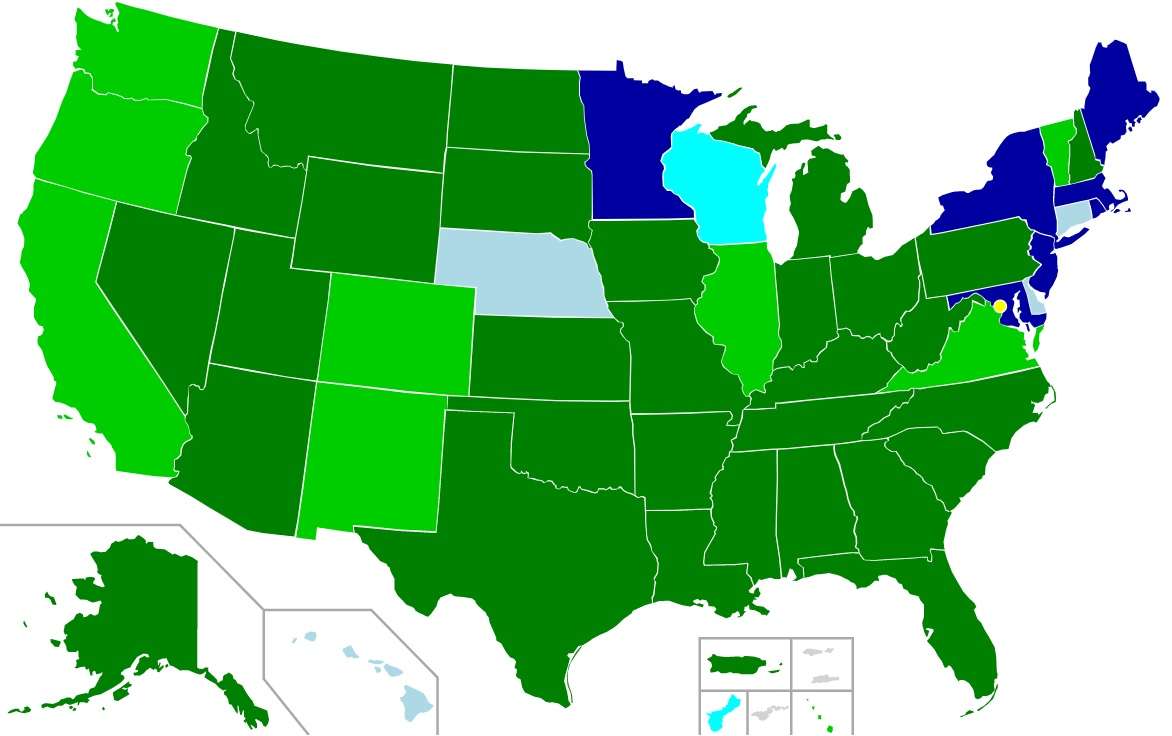
3/4 of States Are Now Stand Your Ground; only 12 Are Duty to Retreat

But what exactly do these terms mean?

| 

I wrote about this several months ago, but several states have gone stand-your-ground since then—Ohio, Arkansas, and now North Dakota—so I thought I'd repeat it.

[A.] The "duty to retreat" is something of a misnomer (though a very common one); it's not actually a legally binding duty (the way a parent has a duty to support a minor child, or a driver has a duty to exercise reasonable care while driving). Rather, it's a provision that, under certain circumstances, failing to retreat from a confrontation will effectively strip you of your right to use deadly force for self-defense.

To see how it works, let's first set aside situations where you may not use deadly force for self-defense regardless of whether you're in a stand your ground state:

  1. You generally can't use deadly force for self-defense in most states unless you reasonably believe that you're facing the risk of death or serious bodily injury or some serious crime: rape, kidnapping or, in some states, robbery, burglary, or arson.
  2. In particular, you can't use deadly force purely in retaliation, once any threat has passed.
  3. Nor can you use deadly force against a simple assault, unless you reasonably believe that you're facing the risk of death or serious bodily injury.
  4. You often can't use deadly force merely to protect property, but it's complicated.
  5. You generally can't use deadly force where you are yourself engaged in the commission of a crime (e.g., if you're robbing someone and he fights back, you can't "defend" yourself against him).
  6. You generally can't use deadly force if you attacked the victim or deliberately provoked the victim with the specific purpose of getting the victim to attack or threaten you.

Now let's set aside situations where you may use deadly force for self-defense, again regardless of whether you're in a stand your ground state:

  1. You reasonably believe that you're facing the risk of death etc. (see above) and you can't retreat with complete safety. This would cover most situations where, for instance, you're facing an attacker who has a gun, since one generally can't safely retreat from a gun.
  2. You reasonably believe that you're facing the risk of death etc. and you're in your home, or (in some states) on other property that you own or in your vehicle or in your workplace. At least the "home" aspect of this is often called the Castle Doctrine, on the theory that your home is your castle.

So what does that leave for the duty-to-retreat / stand-your-ground debate?

  1. You reasonably believe that you're facing the risk of death etc.
  2. You're outside your home (or similar place).
  3. You're not committing a crime, and you aren't the initial aggressor, and (generally speaking) you are where you are legally entitled to be.
  4. In duty-to-retreat states, you are not legally allowed to use deadly force to defend himself if the jury concludes that you could have safely avoided the risk of death or serious bodily injury (or the other relevant crimes) by retreating with complete safety.
  5. In stand-your-ground states, you are legally allowed to use deadly force to defend yourself, regardless of whether the jury concludes that you could have safely avoided the risk of death etc. by retreating.

As best I can tell, the current rule is that 12 states fall in the duty to retreat category, with the states being bunched up quite a bit geographically; the other 38 states are stand your ground:


 Stand your ground by statute (30 states plus PR)
 Stand your ground by court decision (8 states plus CNMI)
 Duty to retreat except in your home (MA, MD, ME, MN, NJ, NY, RI)
 Duty to retreat except in your home or workplace (CT, DE, HI, NE)
 Duty to retreat except in your home or vehicle or workplace (WI, GU)
 Middle-ground approach (DC)
 No settled rule (AS, VI)

Pennsylvania imposes a duty to retreat only when faced with an attacker who isn't displaying or using a weapon "readily or apparently capable of lethal use." Since it's rare to have a threat of death or serious bodily injury (remember, you generally can't use deadly force without such a threat) in the absence of such weapons, or of physical restraint that prevents a safe retreat, I view the Pennsylvania rule as being more on the stand-your-ground side.

The rule in federal cases seems to be ambiguous, and it is in D.C. as well. The D.C. formulation, for instance, is a "middle ground." The law "imposes no duty to retreat, as it recognizes that, when faced with a real or apparent threat of serious bodily harm or death itself, the average person lacks the ability to reason in a restrained manner how best to save himself and whether it is safe to retreat." But it "does permit the jury to consider whether a defendant, if he safely could have avoided further encounter by stepping back or walking away, was actually or apparently in imminent danger of bodily harm." Query what exactly that means.

Still, I think this reflects the general pattern:

  1. 3/4 of the states are stand-your-ground, and most of them took this view even before the recent spate of "stand your ground" statutes.
  2. There is however a significant minority, basically a quarter of the states, in favor of a duty to retreat.
  3. Of course, none of this tells us what the right rule ought to be.

Friday, March 26, 2021

Isaac Saul's Take on Gun Control


 Isaac Saul's Take on Gun Control


Imagine there were legally sold items in the United States responsible for 38,000 deaths annually, but Americans love them dearly and they would never be made illegal. Imagine that over 90% of American households have access to one of them; but that there are strict laws that govern their usage. Each one must have a unique serial number that tracks its usage, and it is illegal to use one unless you are trained, tested, insured, certified, and re-certified regularly to ensure you are capable of using it safely. Imagine that there are oversight panels that require safety features to be equipped in each one and that it is illegal not to use some of those safety features when operating one, because of how lethal and dangerous these items can be. Would you think we should ban these items? Would you think we should de-regulate them? Or should we try to make them incrementally safer to use within this current system?

It's not hard to imagine, because this is already the American relationship with the automobile.

Now: Automobiles aren’t designed to be weapons. There’s nothing in the Constitution about our right to own a vehicle. And there’s no complex relationship in America between ownership of a car and self-defense or protection from government tyranny. But we can look at these two distinct kinds of ownership in America and think about how they differ. When we do, I think there’s reasonable cause to bring the gun world a bit closer to the regulatory world of vehicles. 

I wrote 10 days ago about the Democrats’ two gun control bills. I’m often skeptical of gun restrictions, and while I’m not exactly sold on what positive effect the bills could have, it’s clear they do practically nothing to restrict “the law-abiding citizen buying a gun” — and, given that, if they were to prevent a few of the horrific mass shootings we experience every year, it’d be worth passing them. Both of the bills seem to be constructive, common-sense gun laws that have the rough outlines of additional background checks and restrictions that the vast majority of Americans support. They’d be a perfectly reasonable piece of the solution. 

At the same time, the left continues to undermine itself with language around gun legislation. I have, no joke, asked about 20 liberal friends to define “assault weapons” and none of them can. The real definition is quite difficult to pin down because it is essentially a term invented by activists. Technically, if you’re talking to someone who understands guns, they’ll tell you an assault weapon is a gun that can switch between semi and fully automatic firing capabilities. But under that definition, AR-15s, which are the bane of many gun control activists, do not qualify. They don’t have select fire capabilities, they’re just semi-automatic (and “AR” does not stand for “assault rifle” — it stands for ArmaLite, the manufacturer of the rifle).

The AR-15 is notorious for its use in mass shootings. But it’s also the most commonly owned rifle in the United States, and it’s still popular amongst hunters. Even if Congress were to ban or limit sales of those rifles today, I think it would just lead to a giant boom in sales and court battles that 2nd Amendment advocates would likely win (the Supreme Court’s “in common use” standard for gun ownership essentially protects the right to own weapons that are common).

What’s obvious, though, is that we’ve spent decades doing nothing and the problem has not been solved. Everyone looking at this shooting can pick their narrative. A foreign-born teenager bullied until he snaps? A Syrian immigrant who could have extremist ties? Another lonely male taking his frustrations out on the world? A mentally ill person who needed treatment and therapy? Another angry male having a bad day with too easy access to firearms? You can latch onto something that ties to your priors. 

Yes, suicides account for most gun deaths. Yes, handguns are used in most mass shootings. Yes, the practical application of expanding background checks has had mixed results. Gun control activists understand a lot of this stuff and hope their measures address suicide and crime and violence. Their question, and it’s a good one, is how can we possibly look at what’s happening in our country and continue to do nothing?

The right’s focus on “mental health” is also overstated. As is often pointed out (and cannot be noted enough), people with mental health issues are far more likely to be the victims of violent crimes than the perpetrators. But that doesn’t mean mental health issues aren’t at play in a lot of these shootings. Nor does it change the fact that the typical profile of mass shooters seems to be lonely, socially ostracized young men. It just means we need to be as precise as we can in our language. Solving for “mental illness” is not going to gain us much ground.

We have a lot of problems to address. It’s too easy to buy a gun in our country and it’s definitely too easy to buy weapons designed for soldiers. We celebrate and glorify big guns and military cosplay and violence in a pernicious way that creates an arrogant, bombastic, ill-informed and dangerous gun culture — one that I’m loath to be associated with despite often defending second amendment rights and being one who enjoys the use of guns myself. The internet is accelerating extremism and young men in our country are increasingly anxious, paranoid, lonely and susceptible to being coaxed into extremism. We don’t do a good enough job of protecting our children from the cruelty of others that often sends them down that path of violence, though anti-bullying programs are gaining steam and importance in these conversations, too, which is good.

Further, there are many common-sense restrictions on gun ownership and background check laws in place that don’t need to be changed or expanded, just properly enforced. And gun ownership advocates are right to point that out: we’re not doing nearly enough to enforce sharing data across state lines and flagging people who may be a threat to their communities. 

There’s a lot to work on — but instead of pointing to non-restricting changes we can make anytime someone says “gun control” or pointing to the abundance of guns every time someone says “mental health” we should embrace that these changes will come piecemeal and work toward something holistic. Understanding and studying motives is a start. Reforming (and better enforcing) background checks is practical. Elevating the threshold to own weapons of war seems wise. And addressing the epidemic of violent resolutions to personal strife is part of it, too.My take.

Imagine there were legally sold items in the United States responsible for 38,000 deaths annually, but Americans love them dearly and they would never be made illegal. Imagine that over 90% of American households have access to one of them; but that there are strict laws that govern their usage. Each one must have a unique serial number that tracks its usage, and it is illegal to use one unless you are trained, tested, insured, certified, and re-certified regularly to ensure you are capable of using it safely. Imagine that there are oversight panels that require safety features to be equipped in each one and that it is illegal not to use some of those safety features when operating one, because of how lethal and dangerous these items can be. Would you think we should ban these items? Would you think we should de-regulate them? Or should we try to make them incrementally safer to use within this current system?

It's not hard to imagine, because this is already the American relationship with the automobile.

Now: Automobiles aren’t designed to be weapons. There’s nothing in the Constitution about our right to own a vehicle. And there’s no complex relationship in America between ownership of a car and self-defense or protection from government tyranny. But we can look at these two distinct kinds of ownership in America and think about how they differ. When we do, I think there’s reasonable cause to bring the gun world a bit closer to the regulatory world of vehicles. 

I wrote 10 days ago about the Democrats’ two gun control bills. I’m often skeptical of gun restrictions, and while I’m not exactly sold on what positive effect the bills could have, it’s clear they do practically nothing to restrict “the law-abiding citizen buying a gun” — and, given that, if they were to prevent a few of the horrific mass shootings we experience every year, it’d be worth passing them. Both of the bills seem to be constructive, common-sense gun laws that have the rough outlines of additional background checks and restrictions that the vast majority of Americans support. They’d be a perfectly reasonable piece of the solution. 

At the same time, the left continues to undermine itself with language around gun legislation. I have, no joke, asked about 20 liberal friends to define “assault weapons” and none of them can. The real definition is quite difficult to pin down because it is essentially a term invented by activists. Technically, if you’re talking to someone who understands guns, they’ll tell you an assault weapon is a gun that can switch between semi and fully automatic firing capabilities. But under that definition, AR-15s, which are the bane of many gun control activists, do not qualify. They don’t have select fire capabilities, they’re just semi-automatic (and “AR” does not stand for “assault rifle” — it stands for ArmaLite, the manufacturer of the rifle).

The AR-15 is notorious for its use in mass shootings. But it’s also the most commonly owned rifle in the United States, and it’s still popular amongst hunters. Even if Congress were to ban or limit sales of those rifles today, I think it would just lead to a giant boom in sales and court battles that 2nd Amendment advocates would likely win (the Supreme Court’s “in common use” standard for gun ownership essentially protects the right to own weapons that are common).

What’s obvious, though, is that we’ve spent decades doing nothing and the problem has not been solved. Everyone looking at this shooting can pick their narrative. A foreign-born teenager bullied until he snaps? A Syrian immigrant who could have extremist ties? Another lonely male taking his frustrations out on the world? A mentally ill person who needed treatment and therapy? Another angry male having a bad day with too easy access to firearms? You can latch onto something that ties to your priors. 

Yes, suicides account for most gun deaths. Yes, handguns are used in most mass shootings. Yes, the practical application of expanding background checks has had mixed results. Gun control activists understand a lot of this stuff and hope their measures address suicide and crime and violence. Their question, and it’s a good one, is how can we possibly look at what’s happening in our country and continue to do nothing?

The right’s focus on “mental health” is also overstated. As is often pointed out (and cannot be noted enough), people with mental health issues are far more likely to be the victims of violent crimes than the perpetrators. But that doesn’t mean mental health issues aren’t at play in a lot of these shootings. Nor does it change the fact that the typical profile of mass shooters seems to be lonely, socially ostracized young men. It just means we need to be as precise as we can in our language. Solving for “mental illness” is not going to gain us much ground.

We have a lot of problems to address. It’s too easy to buy a gun in our country and it’s definitely too easy to buy weapons designed for soldiers. We celebrate and glorify big guns and military cosplay and violence in a pernicious way that creates an arrogant, bombastic, ill-informed and dangerous gun culture — one that I’m loath to be associated with despite often defending second amendment rights and being one who enjoys the use of guns myself. The internet is accelerating extremism and young men in our country are increasingly anxious, paranoid, lonely and susceptible to being coaxed into extremism. We don’t do a good enough job of protecting our children from the cruelty of others that often sends them down that path of violence, though anti-bullying programs are gaining steam and importance in these conversations, too, which is good.

Further, there are many common-sense restrictions on gun ownership and background check laws in place that don’t need to be changed or expanded, just properly enforced. And gun ownership advocates are right to point that out: we’re not doing nearly enough to enforce sharing data across state lines and flagging people who may be a threat to their communities. 

There’s a lot to work on — but instead of pointing to non-restricting changes we can make anytime someone says “gun control” or pointing to the abundance of guns every time someone says “mental health” we should embrace that these changes will come piecemeal and work toward something holistic. Understanding and studying motives is a start. Reforming (and better enforcing) background checks is practical. Elevating the threshold to own weapons of war seems wise. And addressing the epidemic of violent resolutions to personal strife is part of it, too.

Monday, March 15, 2021

Biden's Dems are Coming for Our Guns


My take. (Mostly from the Right)

I’ve said before and will say again that I’m to the right of most people I know on gun control issues. In my opinion, the left has some major blind spots when it comes to gun control, and their policy solutions in this field tend to have the least reliance on data and the least nuance.

First, guns are not always used for crime or by the “bad guys.” The Centers for Disease Control and Prevention estimates guns are used in between 500,000 and three million self-defense cases per year, far more than the number of deaths or injuries attributed to firearm use (in 2017, 39,773 people died from gun-related injuries in the U.S., according to the CDC). As most conservatives are quick to cite, more than 60% of those 39,000 deaths are suicides, which is not meant to be a comforting statistic so much as it’s meant to point out that someone doing harm to another person with a gun is less common than a glance at the numbers might suggest.

Second is that the evidence of universal background checks’ effectiveness on reducing gun violence is limited. As German Lopez noted in a Vox piece, “several studies in the past few years ‘found that universal background checks, enacted at the state level, have a limited effect’ on firearm homicide and suicide rates.” To make it effective, states need a national registry or firearm licensing system to accompany the background checks.

Third is that we have much of what we need on the books right now to reduce the rate of gun violence in the U.S. Dana Loesch’s antagonistic and intentionally divisive personality makes me hesitant to cite her, but she laid this out well in her newsletter. The short version is that, thanks to a bunch of bureaucratic red tape and bad policy, the FBI doesn’t access a valuable chunk of its criminal database to expedite searches and checks on prospective gun buyers. This is probably how Dylann Roof was able to get a gun before committing the mass murder of Black parishioners in South Carolina. Making these searches more efficient is probably more helpful than expanding the time period for them to take place from three to ten days.

The Wall Street Journal also noted that in March of 2018, Congress “tucked a provision in a spending bill signed by then-President Donald Trump to strengthen compliance with the national background check system for buying firearms. The measure added incentives for states and federal agencies, including the military, to submit criminal-conviction records to the system. Federal law requires agencies to submit relevant records, but at the state level, compliance is voluntary unless mandated by state law or federal funding requirements.”

In other words: Until 2018, and still today, we continue to lack complete data and have poor compliance with the very systems already in place that are supposed to track someone’s criminal history and liability as a gun owner. Worse, thanks in large part to the gun lobby, we also have incomplete and muddled data on the impact of legislation around guns — because collecting the data on gun violence and ownership is fought tooth and nail at every turn.

All this being said, the content of this bill is being willfully ignored by many folks on the right. In their Washington Examiner piece, Reps. Cammack and Boebert wrote that H.R. 8 “would make it illegal for a farmer to lend a rifle to a neighbor trying to protect his cattle from wolves, for a homeowner to let her neighbor borrow a firearm following a break-in, for a collector to donate a historic rifle to a museum, and for parents to gift a gun to their child.”

These assertions are all directly contradicted by the actual text of the bill, which states unequivocally that transfer prohibitions “shall not apply to… a transfer or exchange (which, for purposes of this subsection, means an in-kind transfer of a firearm of the same type or value) that is a loan or bona fide gift between spouses, between domestic partners, between parents and their children, including step-parents and their step-children, between siblings, between aunts or uncles and their nieces or nephews, or between grandparents and their grandchildren,if the transferor has no reason to believe that the transferee will use or intends to use the firearm in a crime or is prohibited from possessing firearms under State or Federal law.”

It similarly allows exemptions for transfers “to prevent imminent death or great bodily harm” or “while reasonably necessary for the purposes of hunting, trapping, pest control on a farm or ranch, or fishing,” among others. The contradiction was so stark that I did something I almost never do: I actually submitted correction requests to both The Washington Examiner and The Wall Street Journal, which published similar language in their coverage of the bill (I’ll keep you posted on how that goes -- perhaps I’m missing something!).

Furthermore, fears of the bill being used to create a national registry are directly contradicted  by the fact that “the legislation explicitly prohibits the creation of a national registry.”

All this is to say, I think both sides are overplaying their hands here. The upside of how much good this bill will do, absent other measures, looks ambiguous to me at best. What we really need is better FBI vetting and more data sharing incentives like the ones tucked into the 2018 spending bill. That being said, it is the kind of legislation polling suggests the vast majority of Americans want, and even if it would stop — say — a few of the horrific mass shootings that occur every year, that’s a net positive.

Mostly, I say that because the dangers and restrictions these bills pose to legal gun owners are minimal, especially given the explicit carve-outs I just explained above. Around 90% of background checks are completed in minutes and 97% are done within three days, so despite the facts around the Roof case, we’re really solving for a minority of gun sales that have outsized potential to be dangerous to the public. I think that’s a perfectly good thing for the government to be trying to solve, even if this may be an imperfect way of doing it. I’m encouraged by the Republican sponsors on H.R. 8 and hope that there are enough Republican senators willing to attempt to transcend the culture wars over gun rights to address this legislation thoughtfully. At the bare minimum, given the support for more expansive background checks and the horrific nature of so much of the gun violence in America, they owe it to the public to offer some changes to the bill if they don’t like the current draft.

Monday, December 23, 2019

Gun Control Chicago vs. Houston


CHICAGO
 
HOUSTON, TX
Population
2.7 million
 
2.15 million


Median HH Income
$38,600
 
$37,000


% African-American
38.9%
 
24%


% Hispanic
29.9%
 
44%


% Asian
5.5%
 
6%


% Non-Hispanic White
28.7%
 
26%


Pretty similar until you compare the following:
 
Chicago, IL
 
Houston, TX
Concealed Carry     -     Legal
No
 
Yes


Number of Gun 


CHICAGO
 
HOUSTON, TX
Population
2.7 million
 
2.15 million


Median HH Income
$38,600
 
$37,000


% African-American
38.9%
 
24%


% Hispanic
29.9%
 
44%


% Asian
5.5%
 
6%


% Non-Hispanic White
28.7%
 
26%


Pretty similar until you compare the following:
 
Chicago, IL
 
Houston, TX
Concealed Carry     -     Legal
No
 
Yes


Number of Gun Stores
None
 
184 Dedicated gun stores plus 1500 - legal places to buyguns--Wal-Mart, K-mart, sporting goods, etc.


Homicides, 2012
1,806
 
207


Homicides per 100K
66.7
 
9.6
Avg January high temperature (F)
31
 
63


Conclusion : Cold weather causes murders. This is due to climate change.
 
 Stores
None
 
184 Dedicated gun stores plus 1500 - legal places to buyguns--Wal-Mart, K-mart, sporting goods, etc.


Homicides, 2012
1,806
 
207


Homicides per 100K
66.7
 
9.6
Avg January high temperature (F)
31
 
63


Conclusion : Cold weather causes murders. This is due to climate change.